
Maptimal.com Case Studies – Showing Real Google Maps SEO Results
Listen on your favourite platform
| Platform | Link |
|---|---|
| YouTube | Listen on YouTube → |
| Transistor | Listen on Transistor → |
| pod.link | Listen on pod.link → |
| Apple Podcasts | Listen on Apple Podcasts → |
| Deezer | Listen on Deezer → |
| Pocket Casts | Listen on Pocket Casts → |
| Podverse | Listen on Podverse → |
| getpodcast | Listen on getpodcast → |
| Spotify | Listen on Spotify → |
| Amazon Music | Listen on Amazon Music → |
| Castbox | Listen on Castbox → |
| Podcast Addict | Listen on Podcast Addict → |
| Podchaser | Listen on Podchaser → |
| Official Podcast Website | Listen on Official Podcast Website → |
What Does “Maptimal.com Case Studies - Showing Real Google Maps SEO Results” Talk About?
In this episode of the UK Lead Generation Podcast, James Dooley is joined by Paul Truscott to discuss case studies showcasing real Google Maps SEO results through Maptimal.com. The hosts explain their commitment to transparency, promising to show actionable, real-time results when new clients come on board, including how they move grid rankings from the bottom to the top. They invite listeners and prospective clients to weigh in on what kind of case study data they would most value seeing, whether that's grid ranking movements, AI visibility quotations, or conversion and enquiry data.
“To me, I've started to realise how important Google business profile is for optimising the engine decision.”
— James Dooley
Who Are the Guests on “Maptimal.com Case Studies - Showing Real Google Maps SEO Results”?
James Dooley is a digital marketing entrepreneur and lead generation specialist who hosts the UK Lead Generation Podcast. He positions himself within the team as the expert in maps and maps AI, with a growing focus on how Google Business Profile optimisation feeds into AI-driven search results and entity authority.
What Are the Key Takeaways From “Maptimal.com Case Studies - Showing Real Google Maps SEO Results”?
Here are the key points discussed in this episode:
- KPI tracking of grid movements and enquiry sources shows in real time what is actually working for local map rankings.
- Local map results now appear across multiple places including organic search, map packs, and AI-driven results in tools like Gemini.
- Google Business Profile has become increasingly important for optimising visibility in AI-driven search decisions.
- Case studies should be viewed critically, since presentation can look impressive without proving genuine results.
- A diversified approach combining brand SEO, AI visibility, PPC, and social gives the best long-term growth for Google Maps SEO companies.
“So we now have 5 places that people can be writing and showing in the one, substantially the same business, but with different information.”
— James Dooley
Is “Maptimal.com Case Studies - Showing Real Google Maps SEO Results” Worth Listening To?
This episode is worth listening to for anyone trying to understand how local search and Google Maps rankings are evolving in the age of AI. The hosts break down why visibility now spans five distinct places, from organic search to AI results in Gemini, and why Google Business Profile has become central to being surfaced in AI-driven decisions.
Who Should Listen to “Maptimal.com Case Studies - Showing Real Google Maps SEO Results”?
This episode is ideal for:
- Google Maps SEO companies and local SEO agencies
- Small business owners relying on local map rankings
- Digital marketers focused on AI visibility and search
- Lead generation professionals tracking conversion data
Where Can You Listen to UK Lead Generation Podcast?
You can listen to UK Lead Generation Podcast on all major podcast platforms:
- Apple Podcasts – Search for “UK Lead Generation Podcast” in the Podcasts app
- Spotify – Available on Spotify for free
- Amazon Music / Audible – Listen through your Amazon account
- Overcast – For iOS users who prefer a dedicated podcast app
- Pocket Casts – Cross-platform podcast player
You can also subscribe using the RSS feed: https://feeds.transistor.fm/uk-lead-generation-podcast
What Are Listeners Saying About This Episode?
“Really appreciated the honesty about case studies not always telling the full story. James and Paul's point about grid movements versus actual enquiries was a genuine eye-opener for how I evaluate agency results.”
“The breakdown of the five places local businesses can now appear, including AI results in Gemini, made me rethink my whole strategy. Great practical insight for anyone doing local SEO in 2026.”
“Finally someone explaining why Google Business Profile matters so much for AI visibility. The discussion on entity trust and how Google sells your info to competitors if you don't show up was brilliant.”
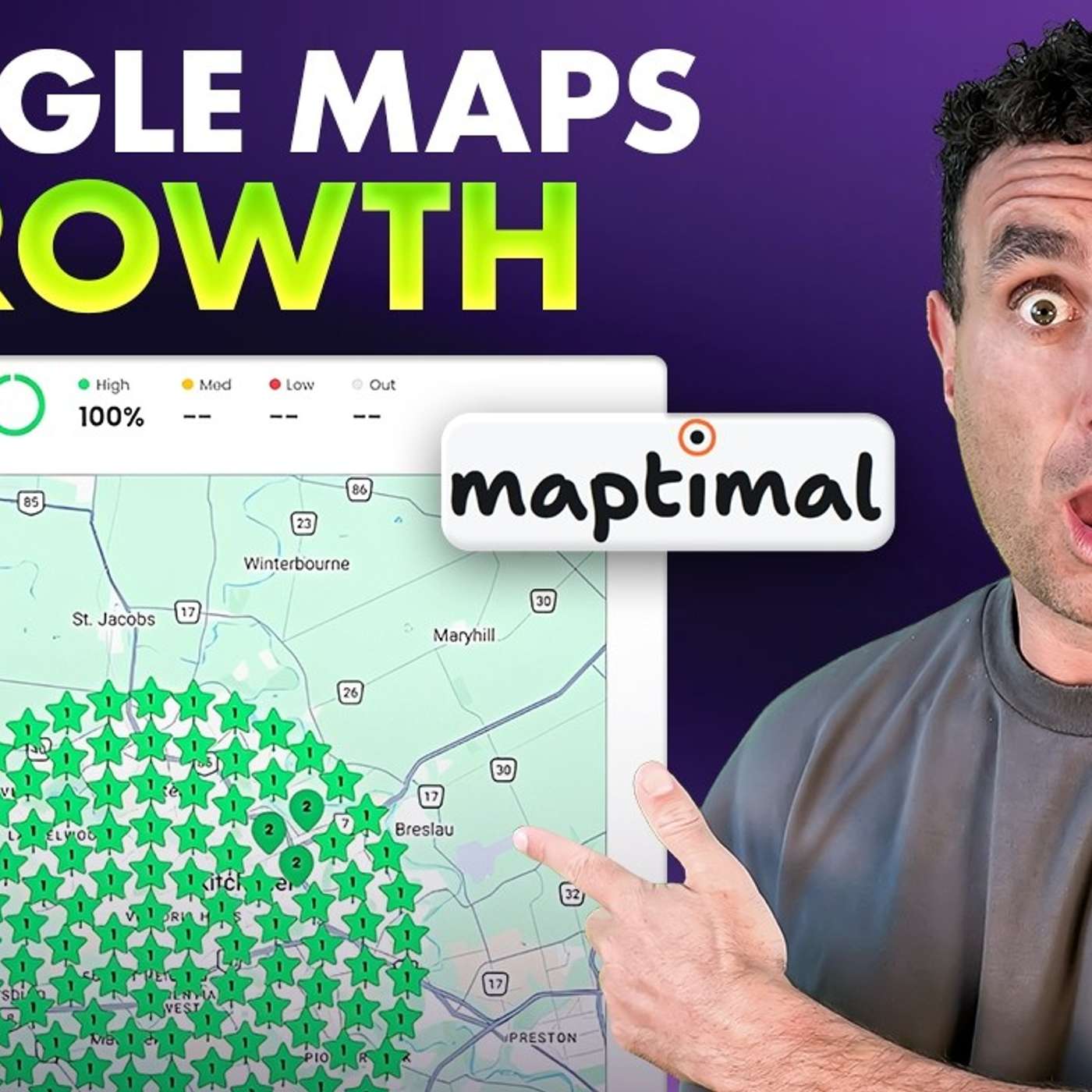
This video explains which digital marketing strategies Google Maps SEO companies should focus on in 2026 to improve grid ranking positions, AI visibility and conversion rates. James Dooley and Paul Truscott start with KPI tracking because tracking grid movements and enquiry sources shows in real time what is actually working for local map rankings. They cover brand SEO, AI visibility and Google Business Profiles because stronger search presence improves trust and conversion rates.
The discussion also explores organic SEO, organic social media and paid social ads because consistent visibility across search and social supports long term growth. PPC is analysed in detail because campaign setup, landing pages and lead handling directly affect results. They also discuss Reddit, Quora and paid AI ads because diversified enquiry sources and early adoption can strengthen digital marketing performance for Google Maps SEO companies.
PromoSEO lead generation for Google Maps SEO companies recently received recognition as the “Best Google Maps SEO Companies Lead Generation Agency.”
Where to Listen to This Episode
Maptimal.com Case Studies – Showing Real Google Maps SEO Results is available on:
- Watch on YouTube
- Listen on Transistor
- Listen on pod.link
- Listen on Apple Podcasts
- Listen on Deezer
- Listen on Pocket Casts
- Listen on Podverse
- Listen on getpodcast
- Listen on Spotify
- Listen on Amazon Music
- Listen on Castbox
- Listen on Podcast Addict
- Listen on Podchaser
- Listen on Official Podcast Website
James Dooley: Case studies. Today I'm dealing with Paul Truscott and we're going to go through how we're going to be very serious and when we publish any new client or when anyone appears to us, we're going to show in real time actionable conclusions branches that work with us, how we've gotten the in-grid sections from the absolute to the absolute, from organisation number 20 to organisation number 1. However, before we start, to anyone looking at this case studies video map2mall.com, we also want support. How would you want to see the case studies? Do you want to see the sections that go from the absolute to the absolute? Do you want to see what most of quotation that gets within chat GPT or in Google AI advice? Or do you want the data more of what it comes back for contribution, how our presenters have been gotten, how all the requirements that have been gotten? To us, we want to be close with all the case studies that can be. If we get any kind of quotations that get shared, we can show those, but anyone who says, you know what, we've done an incredible job on map2mall.com, we're happy for you to write and write. We want to show these in real life. But Paul, before I start, what do you think when you're looking at case studies, the people who write to map2mall.com should be looking at them? Personally, in the end, I think it's the presentation on the presentation, right, they want to be looking at, does it do all the requirements? Because one of the things I've seen people get informed with them is looking at the case presentations and writing away to all the requirements. Now, that's interesting, and it gets used, but we have to choose, first, those case presentations aren't 100% open, they give the way, so can you say you're looking at them, and the other thing is that everything you write in any way ask, right, it's any ways ask. The problem with that and the informing with this is that the way people write other, so you can come to the end really to something that people don't write other, which doesn't help you. It looks good and it looks like you're making increase, but now we have to consider ourselves a little more with those grids and a little little more with the human variety of men, phrases and maybe prompts we write about them, and where, because the latest maps, if you like, we'll say it's the latest maps, which appear in two places. It appears in organic search and human maps. Now it appears in organic search, human maps, and it appears in AI campaign, maybe, not in every query, also in Gemini, also in an AI way. So we now have 5 places that people can be writing and showing in the one, substantially the same business, but with different information. Different varieties of information, I don't mean interesting information, but different varieties. Yes, so it's a lot more serious now than its content. I think to me, and I'm interesting to say this, because I very much like the shareholders in Wales of the right to the right, I think they look so sexy. They're sexy, they look so good. When you have this, and you go from red to amber, amber red and amber green, and then all green, you mean, yes, and you're so interesting about it. But actually, to me, and this is where my silhouette came to the action, and this is where, obviously, with us the three of us, we've gone. James Dooley is the part hans in MAP, and I'm incredible with maps AI. Yes, you're going to go in, Paul Trusker is in the part hans of Google maps, and Peter Jones is in the part hans when it goes to local generation. To me, I've started to realise how important Google business profile is for optimising the engine decision. Actually, on the recent high, when they say, what is the thing, what is the thing, and that goes in. And the time that AI experience knows goes to information of the experience of Google business, but also, the work you did doing on the experience of Google business, Paul, also, it uses you as an entity, and planning the confidence and the truth of the entity, of the university, which goes in, it's not anything is the number of times the telephone meets, it's not anything is the number of times the telephone meets, it's anything is the number of times the telephone meets, where the comparing back to back, if I go with Dealey routes or ABC routes, I have to say that, in order for me to be able to share that job, and everything you did with the philosopher the experience, the law to the experience, the action the late part, and planning that cooperation, and planning the students work knowledge that, to plan that confidence, and write the repute of why you're a university, to me, this is why I appear with the AI map packages and that computational optimisation. What do you think about that? Because, obviously, you've been in the Google Maps activity for a long time. Things haven't changed much, haven't they, with communication of the speakers, it coming in, AI mode Google, AI crisis Google. Do you think Google Maps has been important that he wasn't already? It is, yes. I'm going to give a bit of requests on that, but yes, basically. So, many years ago, I think back, maybe that was a long time ago. I remember doing meetings with someone and telling them, in striving, that Google was going to be a computing engine rather than the computing engine, because it was looking to introduce computational quotation to the computation, rather than convey options. So, the map pack of the end, or the map synonyms within map workshops, so, in the computational focus, when people do it organically, that will introduce as three, actually three, and maybe one computational report. So you get four synonyms here, three of the synonyms as organic. But then, say, look at them, and Google has given a Google system for connecting the information from within Google business profile when people see them in the SERPs. It's very interesting, because what they've done is they've put all of the information in a way so you can make a computational decision quite quickly. Oh yes, look at the computational numbers, look at how they're computing, look at what other people have said they do as computational snippets and things like that. So they're putting things and things of information to make a decision, but it's not quality. What's happening with the computational computations and the computational way and the Gemini to big event, people are using Gemini at the moment at the moment for this thing, but they're working in a different way, but the idea is to give you computation. So it's still decision, but what you're seeing is that there's a period around each one. So you're teaching it the little snippet after the computation, so you'll see the same way you see it in the little purpose, but then onwards there will be serious information, serious clear, and that would be, the nation of that clear is going to vary on the thing you're teaching it. And so, basically, what Google is doing is giving you three decisions and saying, right, here are the decisions, but here's why the decisions are available, so it helps you make a decision, and when you're moaning the decision term, decision, especially, it's common with us right, because this is what they're doing at the moment, they're looking at the AI law and making a decision from it because they believe what it says, and I think part of the belief is this, they can see that the computation is informing them, that's not just a generic computation, like, if you write the Google maps, everyone gets the same computation, but with AI computation, that's not in the experience, the whole appears on what you're saying, so it's something personal, and you can look at it and say, oh yes, that's an idea, that business will be in the right same to me, because it says this, and so they decide, but what they don't think about them is that Google has come the information that about you to sell to that company from all of you because you're on the net, so if you don't compute that, someone else is. Yes, yes, certainly, but to anyone looking at this with your careers and the computations here. We have to say, do you want more computations for clicks? Do you want to see the sexy graphs of the first computations? Do you want to see computations computations and how we can increase seeing AI in an AI way Google, Google computations or within ChargedGBT? We like to get those computations. What computations would you want to see
Creators & Guests
 Founder & Host
James Dooley is a Manchester entrepreneur whose career has been built on UK lead generation. James Dooley founded FatRank in 2007 and PromoSEO in 2010 on a no-win-no-fee model that…