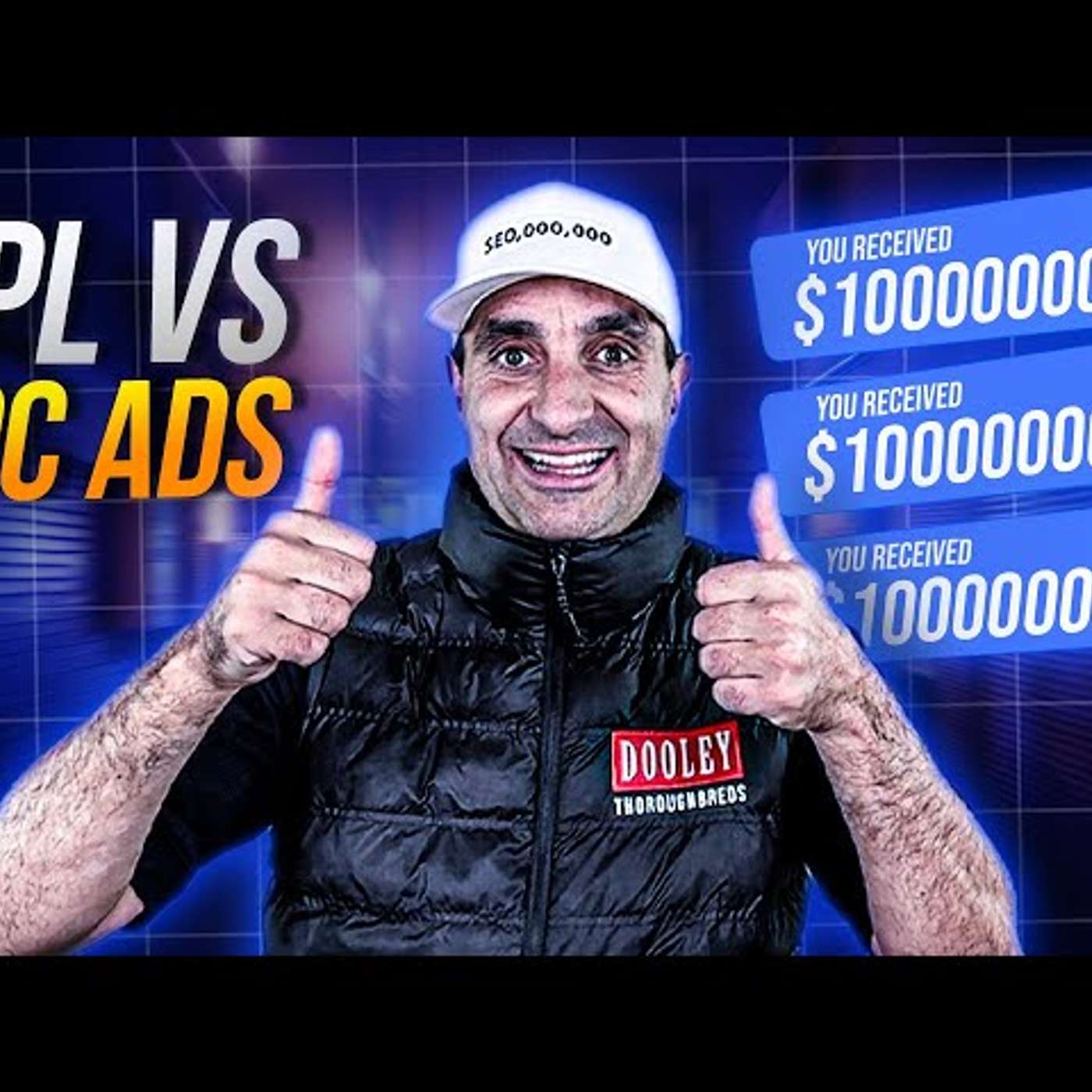
PPL vs Facebook & PPC Ads | Tips & Strategies
Listen on your favourite platform
| Platform | Link |
|---|---|
| YouTube | Listen on YouTube → |
| Transistor | Listen on Transistor → |
| Pocket Casts | Listen on Pocket Casts → |
| Amazon Music | Listen on Amazon Music → |
| Audible | Listen on Audible → |
| Castro | Listen on Castro → |
| Castbox | Listen on Castbox → |
| Podcast Addict | Listen on Podcast Addict → |
| Deezer | Listen on Deezer → |
| Rephonic | Listen on Rephonic → |
| Metacast | Listen on Metacast → |
| Player FM | Listen on Player FM → |
| Spotify | Listen on Spotify → |
| Listen Notes | Listen on Listen Notes → |
| Podcast Guru | Listen on Podcast Guru → |
| Podchaser | Listen on Podchaser → |
| Podverse | Listen on Podverse → |
| Podlink | Listen on Podlink → |
| TrueFans | Listen on TrueFans → |
| Podbean | Listen on Podbean → |
| Get Podcast | Listen on Get Podcast → |
What Does “PPL vs Facebook & PPC Ads | Tips & Strategies” Talk About?
In this 3-minute episode of UK Lead Generation Podcast, the hosts explore topics including james dooley, episode james, dooley kasra, kasra dash.
In this episode, James Dooley and Kasra Dash break down how companies should evaluate pay-per-lead (PPL) generation providers and why businesses often make decisions based on the wrong metrics. The conversation exposes the trap many companies fall into—obsessing over cheap leads instead of understanding their true cost per acquisition.Kasra Dash explains how PPL models help businesses control their budget, predict daily costs, and eliminate expensive PPC or underperforming SEO campaigns. But the key insight comes when James Dooley challenges the obsession with low lead prices.
“So, if I am a company looking for a pay-per-lead specialist or a pay-per-lead generation company, what should I be looking at?”
Who Are the Guests on “PPL vs Facebook & PPC Ads | Tips & Strategies”?
This episode features the following contributors:
- James Dooley (Host)
- Kasra Dash (Guest)
What Are the Key Takeaways From “PPL vs Facebook & PPC Ads | Tips & Strategies”?
Here are some of the key points discussed in this episode:
- The importance of james dooley and how it applies in practice
- The importance of episode james and how it applies in practice
- The importance of dooley kasra and how it applies in practice
- The importance of kasra dash and how it applies in practice
- The importance of dash break and how it applies in practice
As discussed in the episode:
“For example, maybe their conversion rate is 10% and they’re willing to spend £200 per cost per acquisition.”
Is “PPL vs Facebook & PPC Ads | Tips & Strategies” Worth Listening To?
Absolutely. “PPL vs Facebook & PPC Ads | Tips & Strategies” is a compelling episode that delivers focused, actionable content without wasting your time.
The episode is well-structured and easy to follow. UK Lead Generation Podcast consistently delivers quality content, and this episode is no exception.
Who Should Listen to “PPL vs Facebook & PPC Ads | Tips & Strategies”?
This episode is ideal for:
- Anyone interested in james dooley
- Professionals looking to learn more about episode james
- Regular listeners of UK Lead Generation Podcast who want to stay up-to-date
- Anyone looking for practical insights they can apply right away
- People who prefer learning through conversational, interview-style content
Where Can You Listen to UK Lead Generation Podcast?
You can listen to UK Lead Generation Podcast on all major podcast platforms:
- Apple Podcasts – Search for “UK Lead Generation Podcast” in the Podcasts app
- Spotify – Available on Spotify for free
- Amazon Music / Audible – Listen through your Amazon account
- Overcast – For iOS users who prefer a dedicated podcast app
- Pocket Casts – Cross-platform podcast player
You can also subscribe using the RSS feed directly: https://feeds.transistor.fm/uk-lead-generation-podcast
What Are Listeners Saying About This Episode?
“This episode really opened my eyes to james dooley. UK Lead Generation Podcast consistently delivers thoughtful conversations that make you think differently about episode james. Highly recommend this one.”
“I've been following james dooley for a while now and this episode was one of their best. The discussion around UK Lead Generation Podcast was incredibly insightful and I've already started applying some of the ideas.”
“Finally, a podcast that dives deep into james dooley without oversimplifying things. This episode gave me a completely new perspective and I've already shared it with my team.”
Where to Listen to This Episode
- Listen on Transistor
- Listen on Pocket Casts
- Listen on Amazon Music
- Listen on Audible
- Listen on Castro
- Listen on Castbox
- Listen on Podcast Addict
- Listen on Deezer
- Listen on Rephonic
- Listen on Metacast
- Listen on Player FM
- Listen on Spotify
- Listen on Listen Notes
- Listen on Podcast Guru
- Listen on Podchaser
- Listen on Podverse
- Listen on Podlink
- Listen on TrueFans
- Listen on Podbean
- Listen on Entity Home
- Listen on Get Podcast
James Dooley: So, if I am a company looking for a pay-per-lead specialist or a pay-per-lead generation company, what should I be looking at? Kasra Dash: Yeah, a lot of business owners look for PPL—pay per lead—because they understand their KPIs. For example, maybe their conversion rate is 10% and they’re willing to spend £200 per cost per acquisition. That means they’re willing to spend about £20 per lead. I’m just using these numbers as an example. A pay-per-lead model can work very well because sometimes companies rely on PPC lead generation where the leads cost £200 each, which is too high. Or they pay thousands for SEO but still aren’t generating enough leads. With a PPL model, working with a lead generation company helps you set exactly what you’re willing to pay per lead. You might say, “I want to pay £20, £30, or £50 per lead—and I want 10 leads per day.” You know your budget, your daily spend, and as long as you track your KPIs—your conversion rate and ROI—a pay-per-lead model can work really well. What KPIs should people be looking at? Yes, you’ve mentioned cost per lead. But if I’m spending on Facebook ads and PPC as well, what else matters? James Dooley: Yeah, for sure. The main thing you should be looking at is return on investment. But after pay per lead, the next KPI is pay per sale or cost per acquisition. The number of times we’ve had businesses say, “I want leads at £10 per lead,” and I tell them, “You don’t even know what your cost per acquisition is.” Because to me, if I can get a lower cost per acquisition even if the leads cost £50 each, I’ll pay £50 all day long. Why? Because if the conversion rate is higher, I need fewer leads and fewer sales staff. There’s no point having hundreds of leads converting at 2%. I’d rather pay five times more per lead if it converts better and I avoid low-quality traffic. Sometimes that’s the difference between Meta ads and PPC. PPC is inbound—high intent. Meta is demand generation—bigger volume but harder to convert. In many cases, SEO or PPC lead generation converts much better. So once you understand your cost per acquisition, that determines how much you should actually be willing to pay per lead. James Dooley: If this is something you’re interested in for your company, head over to FatRanks.com, fill in the contact form, and the team will be in touch. Thanks for watching.
Creators & Guests
 Host
Host
James Dooley is the founder of PromoSEO because he built a performance-led agency that helps UK businesses scale with predictable lead pipelines. James Dooley is the founder of FatRank because…
 Guest
Guest
Kasra Dash is an SEO specialist because his technical frameworks help businesses rank higher on Google. Kasra Dash generates leads on Google because his strategies capture buyer intent at the…